
Expertise Trees Resolve Knowledge Limitations in Collective Decision-Making
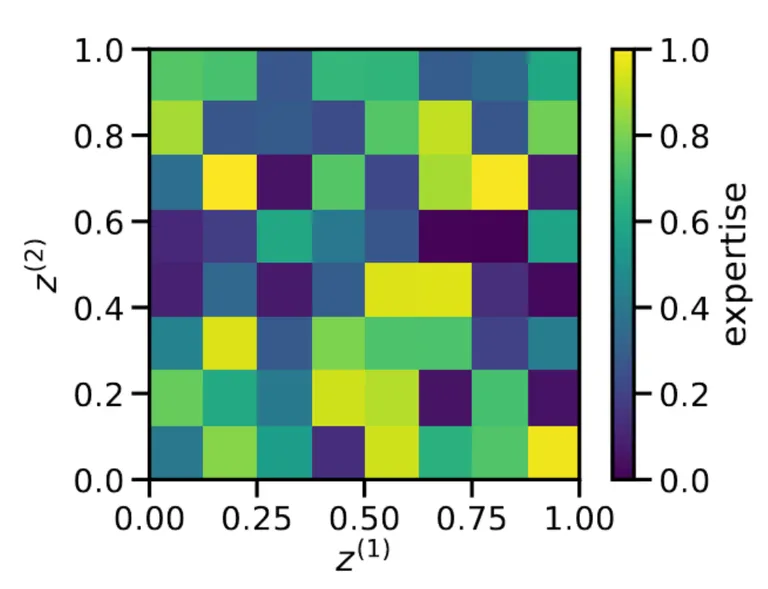
Experts advising decision-makers are likely to display expertise which varies as a function of the problem instance. In practice, this may lead to sub-optimal or discriminatory decisions against minority cases.

Announcement of Working Group on AI
The Partnership on Information and Democracy have acknowledged the pressing need to develop democratic principles and rules to govern AI in the information space. Democracy and our democratic institutions must decide the ethical use and safeguards of the development, deployment and use of AI. This cannot be left to the private sector who are currently setting the rules of the game. The history of social media illustrates the danger of allowing tech companies to set the rules and ethical uses. Countries must act to safeguard a democratic and trustworthy information space.
ACROCPoLis: A Descriptive Framework for Making Sense of Fairness
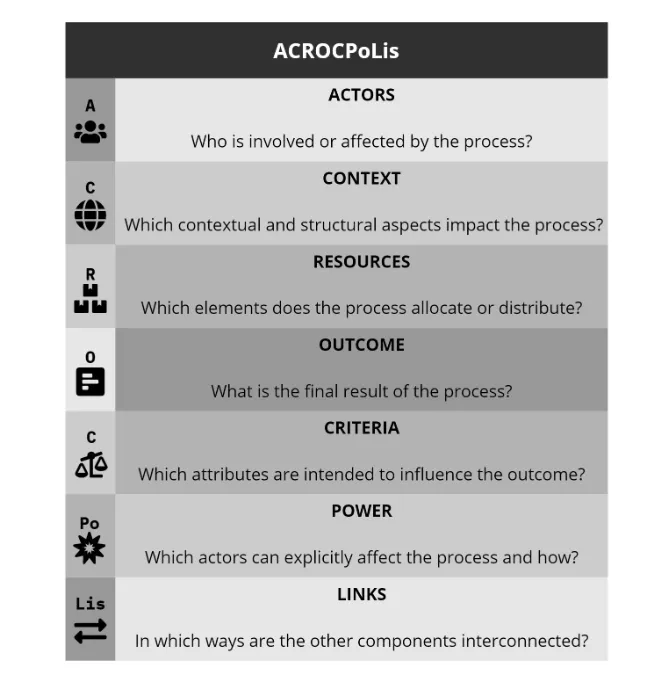
Fairness is central to the ethical and responsible development and use of AI systems, with a large number of frameworks and formal notions of algorithmic fairness being available. However, many of the fairness solutions proposed revolve around technical considerations and not the needs of and consequences for the most impacted communities.

100 Most Influential People in AI
On September 7th, 2023, global media platform and magazine TIME published an article spotlighting TIME100 Most Influential People in AI.
Conditional Abstraction Trees for Sample-Efficient Reinforcement Learning
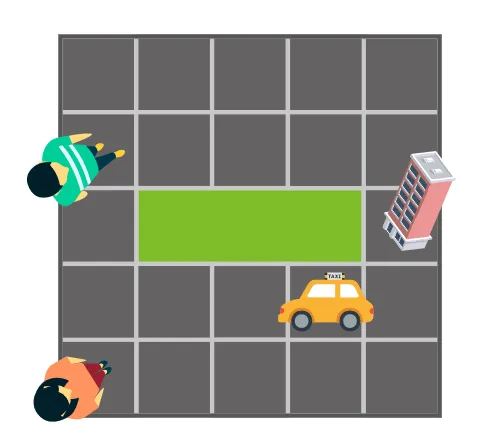
In many real-world problems, the learning agent needs to learn a problem’s abstractions and solution simultaneously. However, most such abstractions need to be designed and refined by hand for different problems and domains of application.

Who Needs to Know? Minimal Knowledge for Optimal Coordination
It is often crucial to have information about one’s collaborators. However, not every feature of collaborators is strategically relevant.

SMCP3: Sequential Monte Carlo with Probabilistic Program Proposals
This paper introduces SMCP3, a new family of sequential Bayesian inference algorithms.
Dealing with expert bias in collective decision-making
Quite some real-world problems can be formulated as decision-making problems wherein one must repeatedly make an appropriate choice from a set of alternatives.

Who Needs to Know? Minimal Knowledge for Optimal Coordination
To optimally coordinate with others in cooperative games, it is often crucial to have information about one’s collaborators. However, not every feature of collaborators is strategically relevant.

Seventh annual CHAI Workshop
From the 16th to the 18th of June, CHAI held its 7th annual workshop at Asilomar Conference Grounds in Pacific Grove, CA.
Harms from Increasingly Agentic Algorithmic Systems
CHAI Micah Carroll and former CHAI interns Dmitrii Krasheninnikov, Lauro Langosco, and Yawen Duan published a paper titled Harms from Increasingly Agentic Algorithmic Systems for FAccT 2023.

Dealing with expert bias in collective decision-making
In their paper published in the AI journal, CHAI Tom Lenaerts and Axel Abels argue that quite some real-world problems can be formulated as decision-making problems wherein one must repeatedly make an appropriate choice from a set of alternatives.