

Siddharth Srivastava Publishes “Why Can’t You Do That, HAL? Explaining Unsolvability of Planning Tasks”
CHAI PI Siddharth Srivastava, along with his co-authors Sarath Sreedharan, Rao Kambhampati, David Smith, published “Why Can’t You Do That, HAL? Explaining Unsolvability of Planning Tasks” in the 2019 International Joint Conference on Artificial Intelligence (IJCAI) proceedings. The paper discusses how, as anyone who has talked to a 3-year-old knows, explaining why something can’t be done can be harder than explaining a solution to a problem. The paper then goes into new work in having AI explain unsolvability.

Michael Wellman Gives Talk “Trend-Following Trading Strategies and Financial Market Stability” at ICML 2019
CHAI PI Michael Wellman gave a talk at the ICML’s Workshop on AI and Finance on how one form of algorithmic (AI) trading strategy can affect financial market stability. The video for the talk can be found here.

Mark Nitzberg Publishes WIRED Article Advocating for an FDA for Algorithms
CHAI’s Executive Director Mark Nitzberg, along with Olaf Groth, published an article in WIRED Magazine that advocates for the creation of an “FDA for algorithms.”

CHAI Releases Imitation Learning Library
Steven Wang, Adam Gleave, and Sam Toyer put together an extensible and benchmarked implementation of imitation learning algorithms commonly used at CHAI (Notably GAIL and AIRL) for public use. You can visit the Github here.
Rohin Publishes “Learning Biases and Rewards Simultaneously”
Rohin Shah published a short summary of the CHAI paper “On the Feasibility of Learning, Rather than Assuming, Human Biases for Reward Inference”, along with some discussion of its implications on the Alignment Forum.

CHAI Paper Featured in New Scientist Article
A recent New Scientist article features a paper that Tom Griffiths and Stuart Russell wrote along with David D. Bourgin, Joshua C. Peterson, and Daniel Reichman. The article discusses how the researchers were able to make a machine learning model that took into account human biases, like risk adversion, that are usually hard for computer systems to model.

CHAI Presentations at ICML
CHAI faculty and graduate students presented their papers at the latest International Conference on Machine Learning.
CHAI Presents Paper on Adversarial Learning at ICML
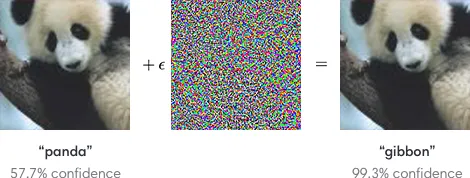
CHAI researchers Michael Dennis, Adam Gleave, Cody Wild, Neel Kant, and Stuart Russell, along with Sergey Levine, gave a talk on their paper Adversarial Policies: Attacking Deep Reinforcement Learning at the International Conference on Machine Learning 2019. There is a video of the talk on the ICML Github (starts at 1h:35m) and the slides can be here

Founders Pledge Recommends Giving to CHAI
Founders Pledge, a non-profit organisation where entrepreneurs make a commitment to give a percentage of their proceeds when they sell their business, has recommend CHAI as an impactful donation opportunity. In their article, they discuss existential risk as a cause area to donate to, including the risks of misaligned artificial intelligence. The article can be found here.

Michael Littman Gives Talk on Reward Design for Cooperation at CHAI
Michael Littman, a professor at Brown University, recently gave a talk at CHAI on Reward Design for Cooperation. Professor Littman also runs the Humanity-Centered Robotics Initiative with Bertram Malle and Peter Haas.

CHAI Faculty Paper Accepted to ICML
David Bourgin, Joshua Peterson, Daniel Reichman, Thomas Griffiths, and Stuart Russell submitted the paper Cognitive Model Priors for Predicting Human Decisions to the International Conference on Machine Learning 2019. The abstract can be found below:

Vincent Corruble Joins CHAI as Visiting Researcher
We would like to give a warm welcome to Vincent Corruble as our newest visiting researcher! Vincent is a professor at Sorbonne University and a researcher at the Laboratoire d’Informatique de Paris 6, one of the largest computer science labs in France. He will be here at CHAI continuing his research on characterising and mitigating the risks of a comprehensive AI that anticipates, satisfies, preempts all human needs and desires, and simulating the emergence of ethical values in a society of learning agents. He will be doing his research with CHAI for the next three months.